What is Kinesiology?
Kinesiology is a way of communicating with the body. Through gentle muscle monitoring, I receive biofeedback from your body about where stress is held. That stress may be structural, chemical or emotional, and very often it is a combination of all three. Because kinesiology considers the whole person rather than a single symptom, it is one of the most holistic modalities available, and it offers a way of listening to the body that many people have never experienced before.
The Foundations: Traditional Chinese Medicine
Kinesiology is grounded in Traditional Chinese Medicine (TCM), one of the oldest continuously practised systems of health care in the world. At its heart is qi (Chi), the vital energy or life force that animates every living thing. In TCM, qi travels through the body along pathways called meridians, each connected to particular organs and body systems. When qi flows freely and in balance, the body is said to move with vitality, clarity and resilience.
TCM also recognises that the body is always seeking balance, expressed through the interplay of yin and yang. Yin is cooling, nourishing and restorative, while yang is warming, active and energising. When these forces fall out of harmony, or when the flow of qi becomes blocked or depleted, the body may begin to show signs of imbalance. In the language of TCM, these patterns are described as stagnation, where energy becomes stuck; dampness, where there is heaviness, sluggishness and congestion; and heat, where there is irritation, restlessness and overactivity. These are traditional descriptions of patterns within the body, not medical diagnoses, but they offer a wise and practical framework for understanding how we feel.
The guiding belief of TCM is that the body has an innate ability to heal itself. The aim is not to override the body but to remove whatever is standing in its way. When the movement of qi through the meridians is re-established, stagnation can begin to shift, dampness can be moved and drained, and excess heat can be released. With balance restored, the body is better placed to return to its natural state of ease and to draw on its own healing potential.
How Kinesiology Works
Kinesiology brings this ancient understanding together with modern muscle monitoring. During a session, I use gentle muscle monitoring to receive feedback on where your qi flows freely and where it is blocked, depleted, or out of balance. This allows us to follow the meridians and their organ relationships, and to understand how emotions influence the body, both structurally and chemically. Each balance works with your unique chi level, supporting energy flow so your body can rejuvenate and reconnect with its innate healing potential.
The Triad of Health
Kinesiology recognises that our wellbeing rests on three interconnected sides: the structural, the chemical and the emotional. Structural health includes our posture, muscles, joints and movement. Chemical health includes nutrition, hydration, and the body's biochemistry. Emotional health includes our thoughts, feelings and beliefs. When one side is under strain, the others are affected, which is why a balance considers all three together rather than in isolation.
What Makes PKP Kinesiology Different?
Professional Kinesiology Practice (PKP) goes further than many other kinesiology styles. Rather than focusing on the problems and complaints of everyday life, a PKP session begins by establishing a goal: where you would like your life to be. Everything that follows is designed to bring your body into alignment with that desired outcome at a physical, emotional and biochemical level. It is a forward-looking approach, and many clients find it both practical and deeply empowering.
The Origins of PKP
Kinesiology began in the 1960s with American chiropractor Dr George Goodheart, and Dr John Thie later brought it to the wider public in the 1970s through Touch for Health. Professional Kinesiology Practice grew from these roots in the 1980s, developed by medical doctor Dr Bruce Dewe and his wife, Joan Dewe, and is now taught in many countries through the International College of Professional Kinesiology Practice. I am grateful to them, and to all the teachers who have carried this work forward, for the foundation on which every one of my sessions stands.
What to Expect in a Session
Each session is designed to work with you, not on you. You are the driver and remain in complete control throughout. The purpose is for you to gain knowledge and feel empowered to assess and upgrade your own neurological, emotional and chemical habits, so that change becomes possible and lasting. Sessions are educational and self-empowering as you learn to connect and communicate with your own body and health. You may also be challenged, because meaningful change often asks us to look honestly at long-held patterns. The aim of every balance is for you to take charge of your wellbeing: to move away from dis-ease and towards complete wellness, your future goals and success.
If Kinesiology Feels a Little Strange at First
It is perfectly natural for kinesiology to feel a little strange at first. The idea that the body can communicate through gentle muscle monitoring is unfamiliar to most people, and it takes time to settle into the concept. In my experience, most people need to see, hear or come across me, or kinesiology in general, around eight times before they feel ready to book their first session. That might be a friend's recommendation, a social media post, a conversation in the community or an article like this one. There is no pressure in that. Curiosity is often the beginning of readiness, and you are welcome to take the time you need. The feedback I hear most often after a first session is simply, "Why didn't I book in sooner?"
Important Information
Kinesiology does not diagnose, prescribe or treat any medical condition or named disease, and it never asks anyone to avoid doctors, prescribed medication or allopathic care. It is a complementary health tool, intended to be used alongside conventional medical care. In every session, you remain in complete control and have the final say on all balances performed.
Book a Kinesiology Session in Coffs Harbour or Online
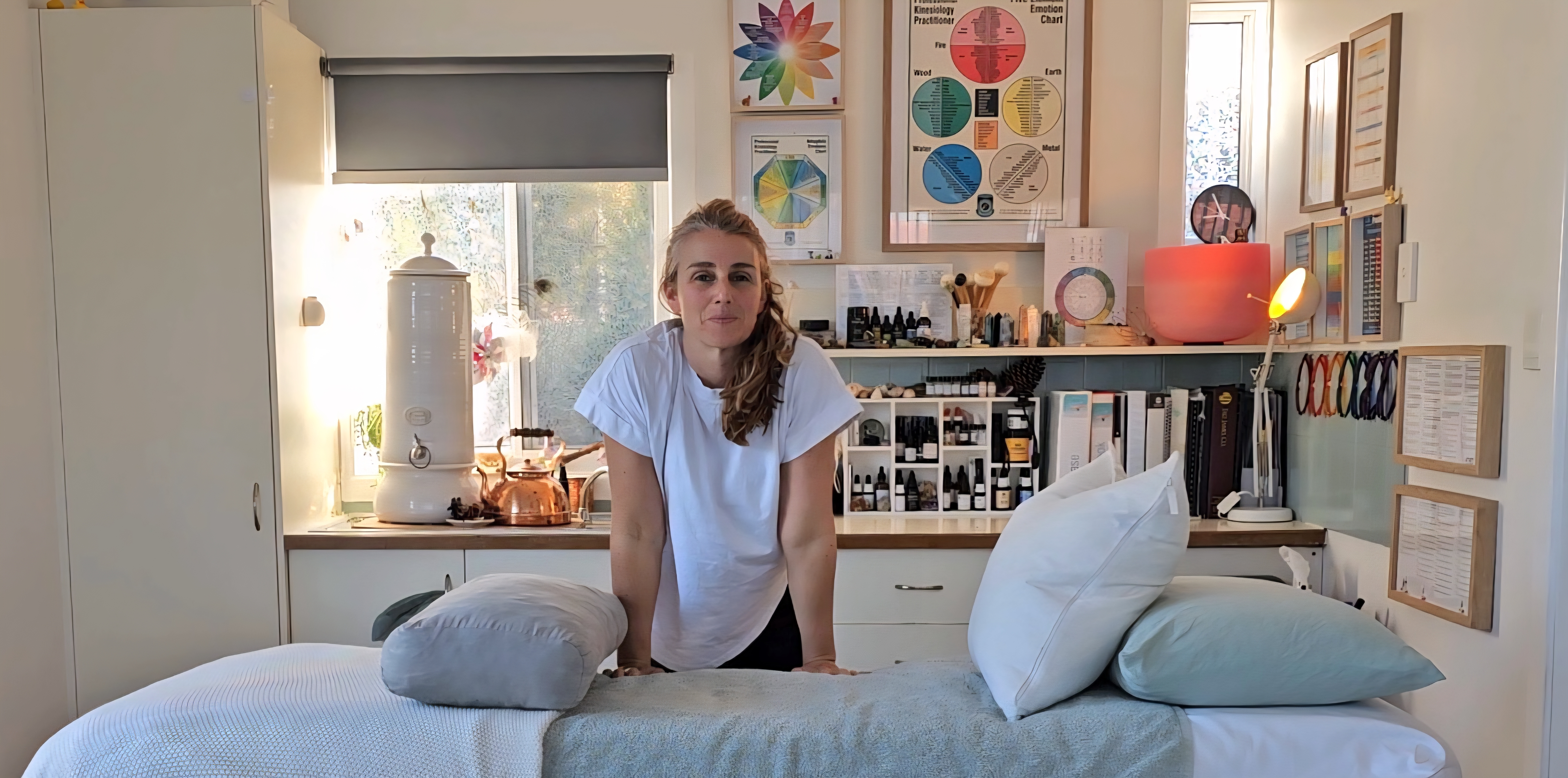
Sessions are available in person at the Achieving Balance Kinesiology clinic in Coffs Harbour, New South Wales, and online via video call for clients anywhere in Australia. If you have been curious about kinesiology for a while, this may be the invitation you were waiting for. Please get in touch to book your session.